

Can a Walkie Talkie Analog be paired with a digital one?
Dec 03, 2025
Leave a message
Hey there! As a supplier of Walkie Talkie Analog, I often get asked this question: Can a Walkie Talkie Analog be paired with a digital one? It's a pretty common query, and today, I'm gonna break it down for you.
First off, let's understand the basics. Analog walkie - talkies, like the ones I supply (check out Analog 2 Way Radio), use continuous signals to transmit voice. These signals are just like the old - school radio waves. They're simple, reliable, and have been around for ages. On the other hand, digital walkie - talkies use discrete signals, which are basically a series of 0s and 1s. This digital technology allows for better sound quality, more features, and often longer range.
Now, the big question: can they be paired? Well, the short answer is it's not that straightforward. In general, analog and digital walkie - talkies operate on different frequencies and use different modulation methods. Analog walkies use frequency modulation (FM), while digital ones use more advanced modulation techniques.
One of the main issues is the way they encode and decode information. Analog signals are continuous waves, so they're decoded in a very different way compared to the digital signals that are made up of binary code. This difference means that they can't directly communicate with each other without some sort of conversion.
However, there are some workarounds. Some modern walkie - talkies are designed to be "dual - mode." These devices can operate in both analog and digital modes. If you have a dual - mode walkie - talkie on one side, it can act as a bridge between the analog and digital worlds. For example, you can set the dual - mode device to analog mode to talk with an analog walkie - talkie, and then switch to digital mode to communicate with a digital one.
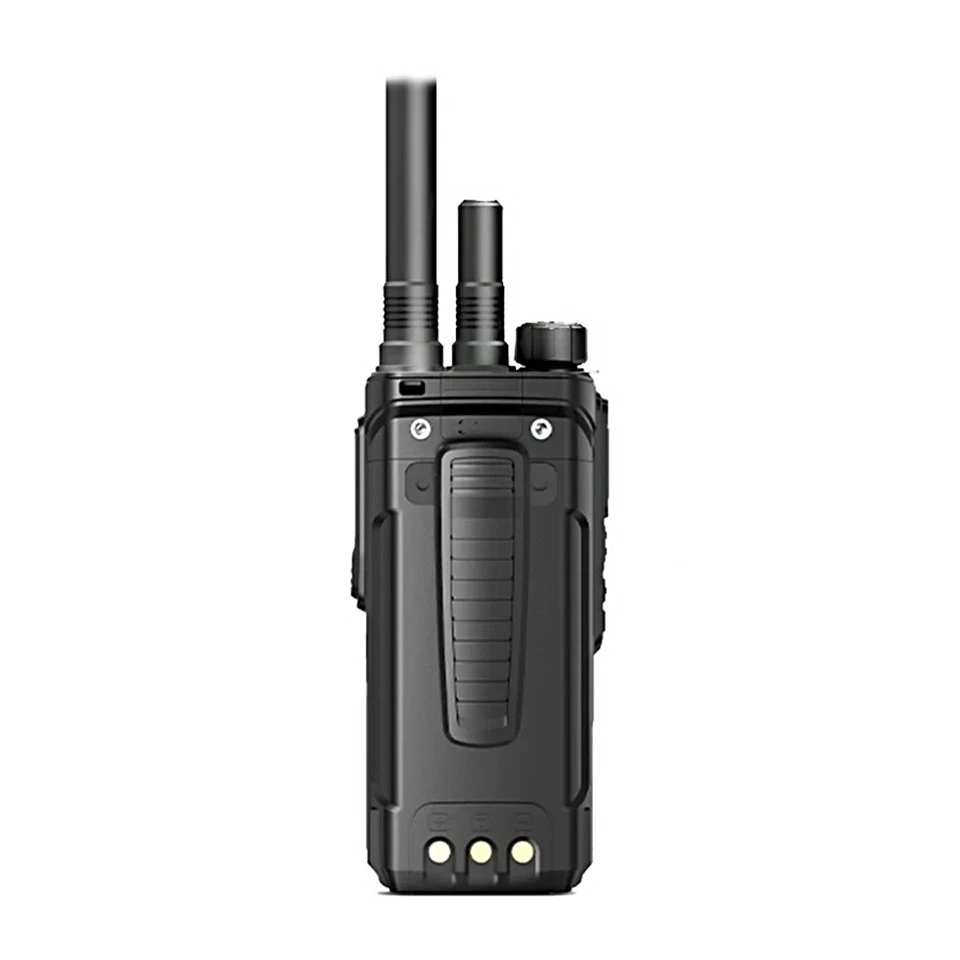

Another option is to use a converter. There are converters available in the market that can convert analog signals to digital and vice versa. But these converters can be a bit pricey, and they add an extra layer of complexity to your communication setup.
Let's talk about the pros and cons of trying to pair them. The advantage is that you can make use of your existing analog walkie - talkies while also taking advantage of the new features offered by digital ones. For instance, if your team has been using Analog Two Way Radio for a long time, you don't have to replace all of them at once. You can gradually introduce digital walkies and still keep the communication going.
But there are also some drawbacks. The conversion process, whether through a dual - mode device or a converter, can lead to a loss of signal quality. You might experience some static or interference, especially if the conversion isn't done properly. Also, the setup can be more complicated, which means more training for your team members.
In terms of range, analog and digital walkies can vary. Analog walkie - talkies often have a more straightforward range, which is mainly determined by the power output and the terrain. Digital walkies, on the other hand, can sometimes have a longer range due to their more efficient signal processing. But when you're trying to pair them, the overall range might be limited by the weaker of the two systems.
If you're in an area with a lot of interference, digital walkie - talkies have an edge. They're better at filtering out noise and can maintain a clearer signal. Analog walkies are more susceptible to interference, so when paired with a digital one, the interference might affect the overall communication quality.
Now, let's consider the cost. Analog walkie - talkies, like the Analog Walkie - talkie I supply, are generally more affordable. They have a simpler design and don't require the advanced technology that digital ones do. Digital walkies, however, come with a higher price tag because of their features and capabilities. If you're thinking about pairing them, you need to factor in the cost of any converters or dual - mode devices you might need.
In conclusion, while it's possible to get an analog and a digital walkie - talkie to communicate, it's not a plug - and - play situation. You need to consider your specific needs, the environment you'll be using them in, and your budget. If you're just starting out and don't have any existing walkie - talkies, you might want to go for all - digital for the best features and performance. But if you already have a fleet of analog walkies, there are ways to integrate digital ones into your system.
If you're interested in our Analog Walkie Talkies or have more questions about pairing them with digital ones, I'd love to have a chat. Feel free to reach out to me for more information and to start a procurement discussion.
References
- Radio Communication Technology Handbook
- Walkie - Talkie Manufacturer Guides