

What is the range of a Walkie Talkie Analog?
Nov 28, 2025
Leave a message
Hey there! As a supplier of Walkie Talkie Analog, I often get asked about the range of these nifty devices. So, I thought I'd sit down and write a blog post to shed some light on this topic.
Let's start by understanding what we mean by the "range" of a Walkie Talkie Analog. In simple terms, the range is the maximum distance over which two walkie - talkies can communicate effectively. But this isn't a fixed number, and there are several factors that can influence it.
Factors Affecting the Range
1. Power Output
The power output of a Walkie Talkie Analog is measured in watts. Generally, the higher the power output, the greater the range. Most consumer - grade walkie - talkies have a power output between 0.5 to 5 watts. For example, a walkie - talkie with a 0.5 - watt output might have a range of about 1 - 2 miles in open areas. On the other hand, a 5 - watt walkie - talkie could potentially reach up to 5 miles or more in ideal conditions.
But it's important to note that increasing the power output also means higher battery consumption. So, there's a bit of a trade - off between range and battery life. If you're going to be using your walkie - talkies for long periods, you might want to find a balance that works for you.
2. Terrain
The type of terrain you're in has a huge impact on the range of your Walkie Talkie Analog. In open areas like deserts, plains, or large fields, the range can be quite impressive. Radio waves can travel relatively unobstructed, allowing for long - distance communication. You can easily get ranges of 5 - 10 miles or more in these open environments.
However, if you're in a mountainous area, the mountains can block the radio waves, significantly reducing the range. Similarly, dense forests can absorb and scatter the radio waves, leading to a shorter range. Urban areas are also challenging, with buildings, skyscrapers, and other structures causing interference and limiting the communication distance. In a city, you might only get a range of a few blocks to a mile or two.
3. Antenna Quality
The antenna is like the ears and mouth of your walkie - talkie. A high - quality antenna can boost the range significantly. Longer antennas generally perform better as they can capture and transmit radio waves more effectively. Some walkie - talkies come with detachable antennas, allowing you to upgrade to a better one if you need a longer range.
The design of the antenna also matters. Omnidirectional antennas send and receive signals in all directions, which is great for general use. Directional antennas, on the other hand, focus the signal in a specific direction, providing a longer range in that particular direction but with limited coverage elsewhere.
4. Frequency Band
Walkie Talkie Analogs operate on different frequency bands, such as VHF (Very High Frequency) and UHF (Ultra High Frequency). VHF frequencies are better suited for long - distance communication in open areas because they can travel farther through the air. However, they are more easily blocked by obstacles. UHF frequencies, on the other hand, are better at penetrating through buildings and other structures, making them ideal for urban and indoor use. But their range in open areas is generally shorter compared to VHF.
Typical Range in Different Scenarios
Open Field
In an open field with no obstructions, a decent Walkie Talkie Analog with a 3 - 5 watt power output and a good antenna can achieve a range of 3 - 8 miles. This is because the radio waves can travel freely without being blocked or absorbed. If you're using a higher - end model with a more powerful antenna and a 5 - watt output, you might even be able to reach up to 10 miles or more.
Urban Environment
In a city, the range is much more limited. With buildings, traffic, and other sources of interference, a Walkie Talkie Analog might only have a range of 0.5 - 2 miles. Even in a less congested urban area, you're unlikely to get more than 2 - 3 miles of range. This is why many security and construction teams in cities rely on UHF walkie - talkies, as they can better penetrate through the buildings.
Mountainous Region
In mountains, the range can be severely restricted. The mountains themselves act as barriers to the radio waves, and the uneven terrain can cause the waves to bounce around in unpredictable ways. A walkie - talkie that might have a 5 - mile range in an open field could have a range of less than a mile in a mountainous area.
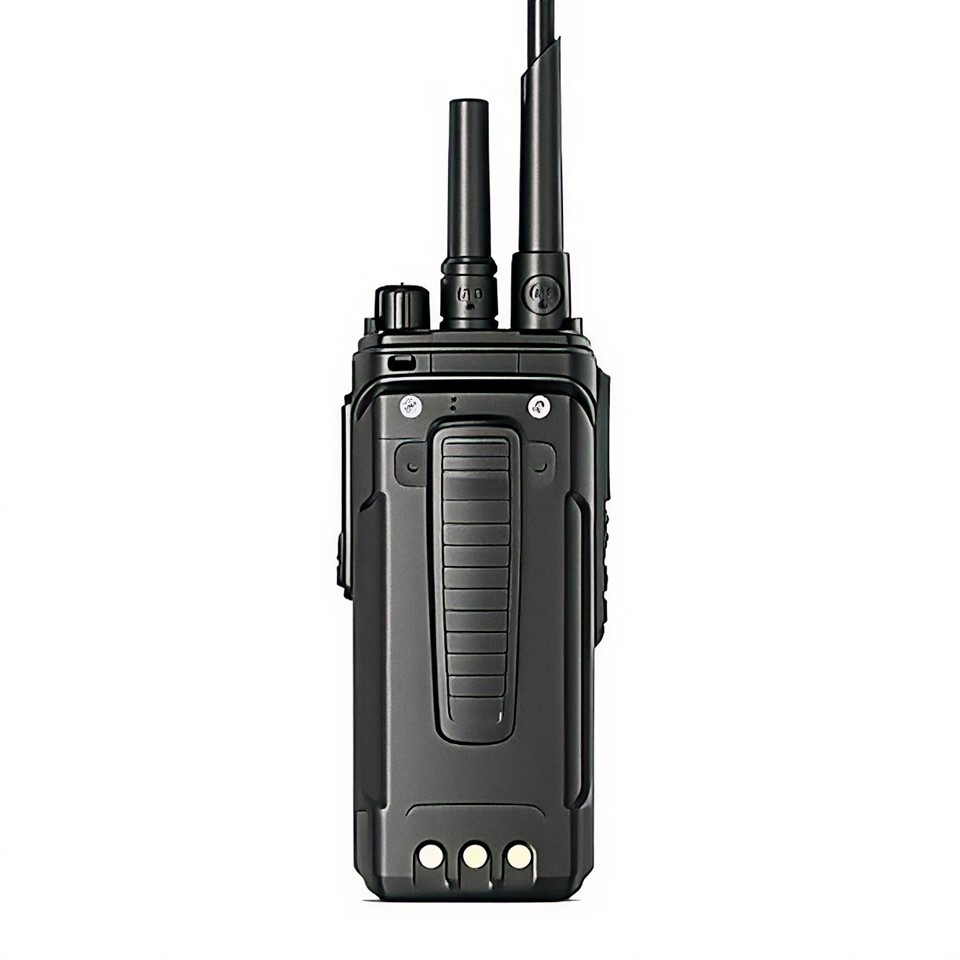

Our Walkie Talkie Analog Offerings
At our company, we offer a wide range of Walkie Talkie Analog devices to suit different needs. Whether you're a hiker looking for a long - range device for your outdoor adventures, a security guard working in an urban area, or a construction worker on a job site, we've got you covered.
Our Analog 2 Way Radio models come with various power outputs, antenna options, and frequency bands. We also provide high - quality Analog Walkie - talkie units that are built to last, with durable construction and long - lasting batteries.
Contact Us for Purchasing
If you're interested in purchasing our Walkie Talkie Analog products, we'd love to hear from you. We can help you choose the right model based on your specific requirements, whether it's range, battery life, or other features. You can reach out to us to discuss your needs and get a quote. We're committed to providing excellent customer service and ensuring that you get the best walkie - talkie solution for your situation.
References
- Radio Communication Handbook, ARRL
- Understanding Radio Frequencies and Their Applications, Electronics World Magazine